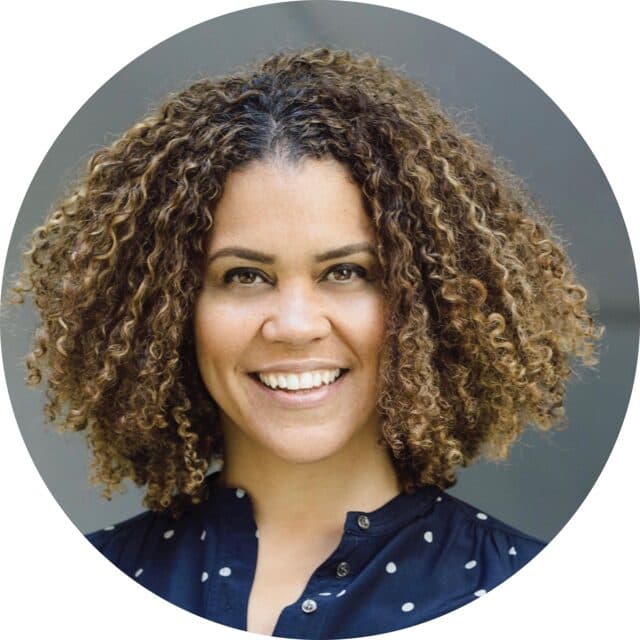
From helping global brands navigate moments of trust fracture to building a consultancy centered on self-trust and institutional coherence, Jen Randle has built a career at the intersection of strategy, leadership, culture, and systems transformation. As co-architect of SGNL, Jen works with individuals and institutions navigating moments of change, helping them build more aligned, resilient, and enduring ways of operating.
In this candid conversation, Jen reflects on the evolution of her work, the role trust plays in leadership and organizations, and why the future belongs to institutions willing to confront fracture with accountability and repair.
On Trust, Leadership, and Building More Enduring Systems
Building SGNL
You’ve built a unique career centered around trust, systems, and leadership. Can you walk us through your journey and the work you’re doing today?
I’m the co-architect of SGNL, a consultancy focused on helping individuals and institutions build and operationalize trust. We think about trust across three planes: micro, meso, and macro. At the micro level, it’s self-trust and helping individuals reconnect with themselves and their own inner knowing. At the relational level, it’s how trust functions within teams and communities. And at the macro level, it’s how institutions and organizations create alignment between who they say they are and how they actually show up in the world.
My role spans strategy, design, leadership advisory, speaking, and organizational consulting. I work with individuals and companies navigating inflection points, helping them build systems and practices that are more coherent, resilient, and enduring.
What I realized over time is that so many institutional challenges are ultimately trust challenges. Whether it’s culture, leadership, reputation, stakeholder relationships, or organizational change, trust sits underneath all of it.
A Pivotal Career Shift
What was a pivotal moment that shaped your path or perspective?
One of the most pivotal moments in my career was the work I did with Starbucks during the trust fracture the company experienced in 2018. That experience fundamentally shifted the way I think about institutions and repair.
What became clear to me was that trust cannot be restored through surface-level responses or performative actions. Real repair requires institutions to genuinely examine themselves and create deeper alignment between their values and their behaviors.
That work planted the seeds for much of what I do today.
Another pivotal moment came in 2020 when I experienced a reduction in force while at Juul Labs. At the time, it forced me to reevaluate what kind of work felt meaningful and differentiated. That period ultimately pushed me toward entrepreneurship and clarified my desire to build a practice centered around trust, systems, and human possibility.
Reclaiming Self-Trust and Institutional Alignment
What is a problem you’re passionate about solving?
At the individual level, I’m passionate about helping people reconnect with their own sense of possibility and self-trust. So many of us have been conditioned to constantly seek validation externally instead of trusting ourselves.
I often think of the people I work with as “N of Ones,” people navigating systems that were never designed for them, yet still finding ways not only to survive but to thrive. There’s extraordinary intelligence in that navigation, and I’m passionate about helping people recognize and reclaim that power.
At the institutional level, I’m interested in helping organizations become more enduring. Many institutions today are experiencing fractures between leadership and employees, between stated values and actual behaviors, between what they project externally and what people experience internally.
The organizations that will endure are those willing to metabolize tension and friction honestly rather than avoid them.
Leadership and Holding Space for Others
What is a challenge that has shaped you as a leader?
One of the biggest leadership lessons for me has been learning how to hold both intensity and spaciousness simultaneously.
I naturally move with a lot of conviction and boldness, but leadership taught me that it’s not enough to simply have a strong vision. You also have to create an environment where other people feel safe enough to contribute their brilliance alongside you.
I’ve had to learn how to lead without shrinking myself while also ensuring the container I’m creating is strong enough to fully hold others. For me, leadership is about creating the conditions where collective excellence becomes possible.
Legacy, Stewardship, and Impact
What legacy or impact do you hope to leave behind?
I think about legacy through the lens of stewardship. I don’t necessarily believe our responsibility is to individually solve every problem. I think our responsibility is to contribute meaningfully to the broader arc of humanity and possibility.
I hope my work helps create new language, frameworks, and ways of organizing around trust that allow individuals and institutions to build more expansive futures.
If my contribution helps move us incrementally toward more coherent, accountable systems, then I consider that meaningful impact.
Lessons From CBS
Lessons That Still Influence Her Today
What’s a lesson from Columbia Business School that still impacts you today?
One of the biggest lessons I learned at CBS is that you rarely need to have every answer immediately, you just need to trust your ability to figure it out.
CBS reinforced the importance of resourcefulness, curiosity, and community. Whether through classmates, alumni, professors, or industry relationships, I learned there is almost always a pathway forward if you stay open and willing to learn.
Relationships That Last Beyond Graduation
Was there a relationship from CBS that has been instrumental in your journey?
Honestly, it’s my core friend group from CBS. We span multiple graduating years, but we’ve remained deeply connected throughout different chapters of life and career.
What’s been most meaningful isn’t transactional opportunity, it’s the shared understanding and support system that came out of the experience. Business school creates a unique shorthand and perspective, and having people who continue evolving alongside you has been invaluable.
Advice for Future Leaders
Making Decisions From Love, Not Fear
What’s one belief or mindset that has changed your life?
One mindset that has fundamentally shaped my life is the idea that decisions made from fear beget more fear, while decisions made from love create expansion and possibility.
That belief has guided many of the major decisions in my life and career. It doesn’t mean avoiding uncertainty, it means refusing to let fear become the primary operating system.
I try to orient myself toward alignment, curiosity, and possibility instead.
Navigating Uncertainty
What motivates you on the days you feel uncertain or challenged?
I try not to bypass difficult emotions or uncertainty. Instead, I sit with them and examine them from different angles, almost like turning a prism and watching how the light changes.
At the same time, I believe deeply in movement. Even small acts of forward momentum help create clarity. Whether it’s writing, creating, organizing, or simply taking action somewhere else in my life, movement helps me shift from anxiety back into perspective.
Looking Ahead
Writing a Book on Trust Literacy
You mentioned you’re writing a book. Can you tell us more about it?
I’m currently writing a book centered around trust literacy, from self to systems. The book explores how trust fractures within individuals, organizations, and broader systems, and what it means to reclaim trust in ways that allow us to build more expansive futures.
It’s part philosophy, part business framework, and part reflection drawn from over two decades of experience working across leadership spaces, organizations, and culture.
The goal is really to create language and tools that help people better understand trust and how it shapes the worlds we build.
The Future of Institutions
What current shift or trend are you most interested in right now?
I’m most interested in the growing visibility of institutional fractures and the increasing unwillingness of people to accept superficial responses from organizations.
Across business, culture, and public institutions, people are demanding greater congruence between values and actions. I think that pressure is necessary.
The institutions willing to genuinely engage in accountability, repair, and recalibration are the ones that will endure into the future.
Those fractures can feel uncomfortable, but they also create the conditions for transformation — and that’s where real possibility exists.
Life Outside of Work
What brings you joy outside of work?
Honestly, my life brings me joy. I’ve worked intentionally to build a life that feels beautiful, integrated, and expansive.
I live by the ocean in California, I have two dogs I adore, and I’ve cultivated friendships across many different chapters of my life. I love traveling, experiencing new environments, and creating space for reflection and exploration.
I don’t really separate “work life” and “personal life” as rigidly as people sometimes do. The work I do professionally is deeply connected to how I want to move through the world overall.