
Dr. Judith Joseph ’07 and Rona Edomwonyi ’20 at the Reclaiming Joy fireside chat

4A Fireside Chat · November 5, 2026

Dr. Judith Joseph on Reclaiming Joy

High-functioning depression, the cost of achievement, and why joy is worth investing in.

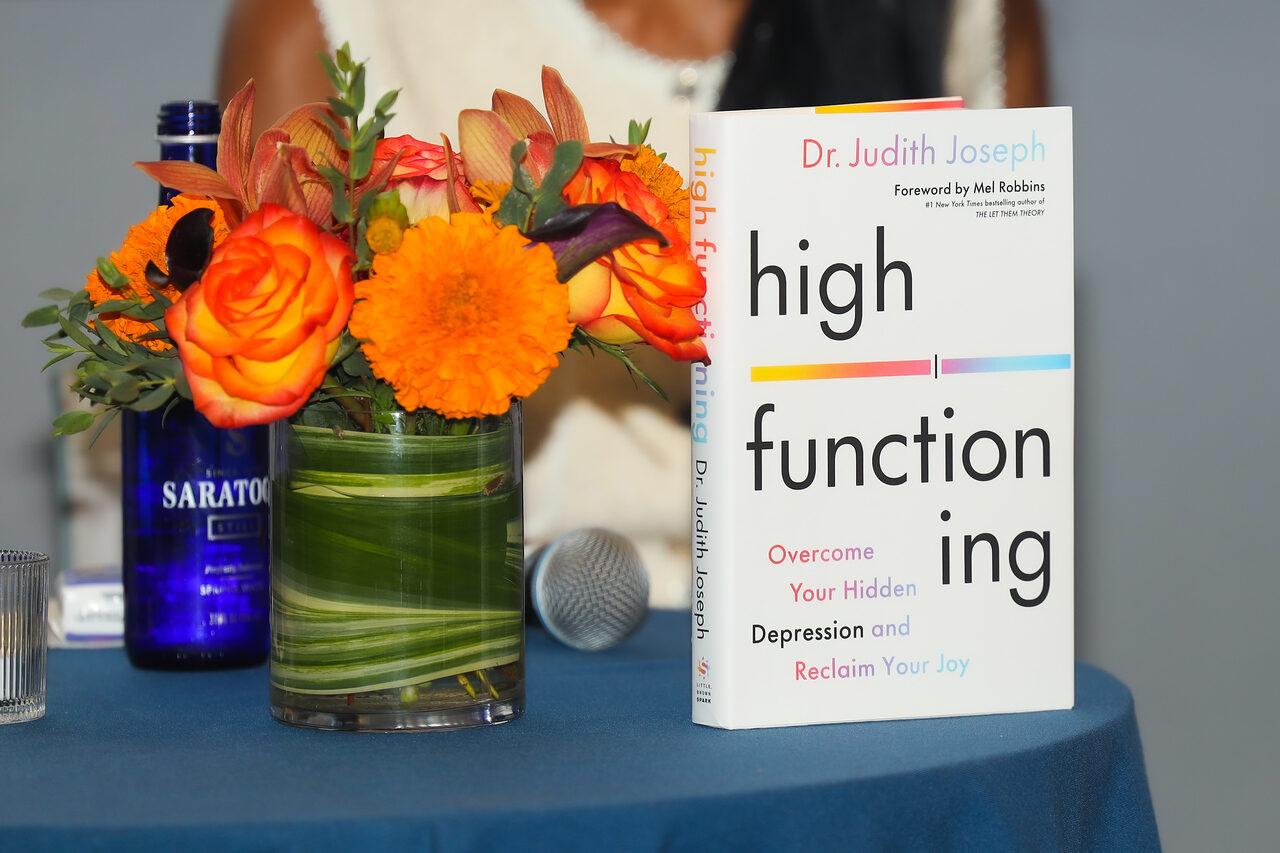
Columbia Business School's African American Alumni Association (4A) welcomed Dr. Judith Joseph ’07, psychiatrist, researcher, Columbia alumna, and author of High Functioning: Overcome Your Hidden Depression and Reclaim Your Joy, for an intimate conversation about mental health, ambition, trauma, and the importance of investing in joy. Moderated by Rona Edomwonyi ’20, 4A Board Chair and tech marketing maven, the discussion explored why even the most accomplished individuals can struggle with emotional fulfillment, how unprocessed trauma can fuel relentless productivity, and what it takes to reclaim joy.

Dr. Judith Joseph and Rona Edomwonyi at Columbia Business School
November 5, 2026 · Columbia Business School, David Geffen Hall, New York

The Conversation

In Her Words

Rona: You've accomplished so much throughout your career. What role has joy played in your success?

Dr. Judith Joseph:

When you read my résumé, it can seem overwhelming. People wonder how one person can do so many things, but I'm able to do these things because I lead with joy. And the interesting thing is that joy is contagious, just as anhedonia, or a lack of joy, can be contagious. We've all walked into a workplace where everyone seems unhappy, and then you look at the leadership and understand why. The opposite is also true. When leaders are joyful, that energy spreads throughout the organization. It's worth investing in your joy because joyful people have better health, stronger relationships, perform better at work, and are more likely to give back to their communities. Joy isn't just something that feels good. It affects how we live, lead, and contribute to the world.


Dr. Judith Joseph speaking during the fireside chat

Rona: You've helped popularize the concept of high-functioning depression. What is it, and how does it differ from burnout?

Dr. Judith Joseph:

High-functioning depression isn't formally recognized as a separate diagnosis by the medical community. The term gained traction during the pandemic, when we saw seemingly happy, productive, and successful people experiencing serious mental health challenges. I call some of these individuals pathologically productive. They're wearing a mask of productivity while struggling with a lack of joy internally. My team developed a research protocol and published what we identified as the first peer-reviewed study specifically examining high-functioning depression. One of our findings was a strong correlation between unprocessed pain, trauma, and high-functioning depression. Unlike burnout, which is an occupational phenomenon and may improve when workplace stressors are removed, high-functioning depression can persist even when someone takes time off or changes environments. These individuals often feel restless when they're not working and empty when they're not busy. I call them human doings rather than human beings.

Rona: You distinguish between happiness and joy. Why is that distinction so important?

Dr. Judith Joseph:

When patients come into my practice, they often tell me they just want to be happy. I ask what happiness means to them, and the answer is usually tied to something external: graduating, getting a promotion, meeting the love of their life, or achieving a particular milestone. The problem is that when happiness depends on something happening first, the goalpost keeps moving. You achieve one thing, and then you're onto the next. Joy is different because it's internal. Even when you're going through a difficult time, you can experience moments of joy. In our research, we measure those moments through ordinary experiences. When you eat, do you savor your food? When you reach out to someone you love, do you feel connected? When you're exhausted and take a nap, do you feel refreshed? These are points of joy. Maybe you experience one today and two tomorrow. The goal is to become more present, process the pain that may be holding you back, and recognize those moments as they happen. Joy is our birthright, and sometimes we need support learning how to access it again.

Rona Edomwonyi ’20 moderating the conversation

Rona: What does anhedonia look like for someone who doesn't realize they're experiencing it?

Dr. Judith Joseph:

Many of my patients come in saying that something feels off, even though everything in their lives looks great. Some feel guilty because they think they have nothing to complain about. When we go through an anhedonia assessment, they begin recognizing that they're no longer enjoying things they once loved. Music doesn't excite them. They don't look forward to seeing friends. Art doesn't inspire them the way it used to. There's a sense of emotional numbness. I actually went viral on social media after posting a video explaining anhedonia. People from all over the world responded, saying they finally had a word for what they were experiencing. One of the things people don't realize is that you don't have to feel visibly sad to meet the criteria for clinical depression. Anhedonia can be a primary symptom, which makes it particularly important to recognize because the suffering is often invisible.

Rona: How does scarcity trauma influence high achievers, particularly those who are the first in their families to enter certain professional spaces?

Dr. Judith Joseph:

When I was developing my research, I wanted to expand how we think about trauma. Traditional diagnostic definitions focus heavily on certain life-threatening experiences, but I was seeing patients who had endured psychological abuse, financial instability, discrimination, neglect, and other deeply painful experiences that didn't necessarily fit those definitions. There's a difference between a scarcity mindset and scarcity trauma. Mindset relates to how you think and make decisions, while trauma can manifest through your body's stress response. For some high achievers, that response looks like constant activity. They can't slow down because they're afraid of running out of resources or losing everything they've worked for. I experienced that myself. There was a period when I was conducting far more research studies than I needed to because I was afraid of not having enough. When I finally slowed down and prioritized joy, the opposite of what I feared happened. I flourished.

An alumna asking a question from the audience

Rona: You made a major career change during your medical training. How did that experience shape your understanding of joy?

Dr. Judith Joseph:

I initially matched into anesthesiology, which was a highly competitive specialty with excellent financial prospects. From the outside, it looked like the perfect career. But halfway through my residency at Columbia, I was miserable. I remember telling a mentor how unhappy I was, and he responded that nobody was happy. That made me realize I needed to find a different environment. I had always loved psychiatry, particularly after working with children in South Africa who had lost their parents to HIV/AIDS. But growing up in a Caribbean family, psychiatry wasn't necessarily viewed as the most desirable path. My parents questioned why I would leave anesthesiology to become a psychiatrist. Still, I knew that staying in a field that made me miserable wasn't sustainable. Eventually, I joined Columbia's psychiatry residency program, where I was encouraged to begin therapy myself. Initially, I thought I didn't need it, but I discovered how much unprocessed trauma I was carrying. That experience changed my life and eventually inspired me to help introduce mental health conversations into my father's church community. What began as my own journey toward healing became an opportunity to help others.

Rona: Your book introduces the Five Vs framework for reclaiming joy. Can you walk us through it?

Dr. Judith Joseph:

I wanted people to have five simple tools they could remember by looking at their hand. You don't have to practice all five every day. For high-functioning people who already put pressure on themselves, I encourage choosing just one or two.

  • Validation: acknowledging and accepting your feelings and experiences without judgment.
  • Venting: finding healthy, intentional ways to express emotions rather than suppress them. That could be therapy, journaling, prayer, or speaking with someone you trust.
  • Values: reconnecting with what gives your life meaning and purpose rather than chasing recognition or external validation.
  • Vitals: caring for your physical and emotional health. Beyond sleep, nutrition, and movement, examine your relationships with technology, other people, and work.
  • Vision: planning for joy, celebrating accomplishments, and protecting time for things you enjoy.

Vision is the one I struggle with most. Coming from a high-achieving Caribbean background, I was always moving on to the next goal. But if you're busy and you don't intentionally schedule joy, it may never happen.

Dr. Judith Joseph signing a copy of High Functioning

Rona: What's one small thing you do regularly that brings you joy?

Dr. Judith Joseph:

I have a daily ritual that started after a vacation in St. Martin, where I discovered a coffee I absolutely loved. I now have it shipped to my home. Every morning after dropping my daughter off at school, I sit in my living room and enjoy a cup. I used to rush straight from dropping her off to starting work, but I decided to protect that time for myself. It's something I look forward to every day, and everyone in my house knows it's my time. It's a small thing, but it brings me genuine joy.

Rona: Finally, how would you finish the sentence, “Joy is...”?

Dr. Judith Joseph:

Joy is your birthright. The motto of my lab is the science of your happiness, not simply the science of happiness. There is only one you, and there will only ever be one of you. The chances of your existence are extraordinarily small, so it's important to understand what makes you unique and what brings you joy. We spend so much time looking at what makes other people happy, but what works for them may not work for us. You have to understand where you're losing your joy before you can begin reclaiming it. That's the science of your happiness.

The conversation offered a powerful reminder that success and fulfillment are not interchangeable. For high-achieving professionals accustomed to measuring progress through accomplishments, Dr. Joseph's message was an invitation to reconsider what it means to thrive. Investing in joy doesn't mean abandoning ambition. It means creating space to experience the life we're working so hard to build.

The Evening

Scenes From the Night

Scenes from the 4A Reclaiming Joy fireside chat

Gallery

Every Photo

4A Reclaiming Joy fireside chat

Photography by Myles Dawson.